
Categories
2. Seller Education & Common QuestionsPublished September 1, 2025
How to Price Your Hudson Valley NY Home for a Quick, Profitable Sale

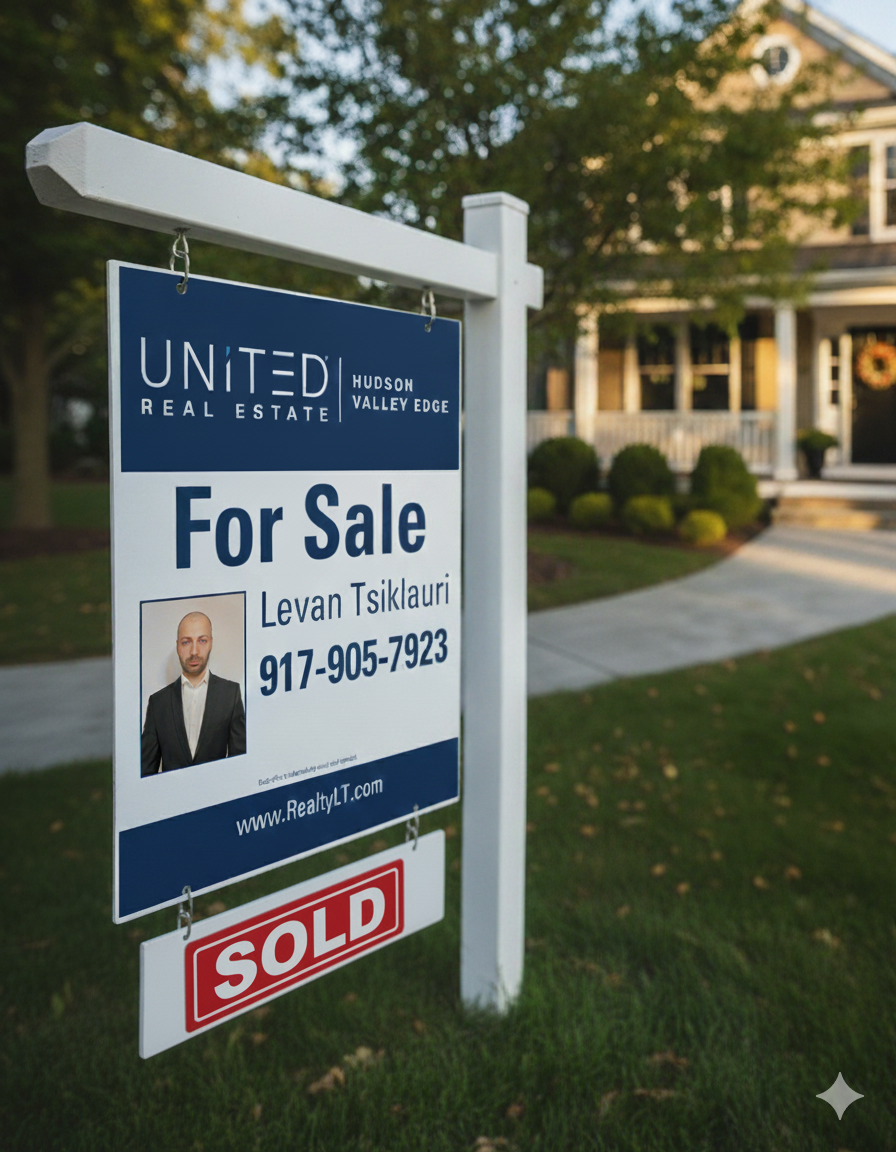
You’ve poured years of love, effort, and investment into your Hudson Valley home. It’s been a backdrop for countless memories. Now, as you prepare to sell, one question looms larger than any other: "What is it really worth?"
It’s a high-stakes question. Price it too low, and you could leave tens of thousands of dollars on the table—money that belongs in your pocket for your next chapter. Price it too high, and you risk the deafening silence of a stale listing, watching as newer, better-priced homes capture the attention of eager buyers.
As a real estate advisor here in the Hudson Valley, I see this anxiety play out with sellers every day. The good news is that pricing your home isn't a guessing game. It's a strategic process—a blend of rigorous data science and nuanced local art.
In this guide, I'm pulling back the curtain on the exact, data-driven methodology that top real estate professionals use to pinpoint a home's perfect market price. We'll move beyond the myths and online guesses to give you the clarity and confidence you need to secure a quick, profitable sale.
The Pitfalls of Common Pricing Myths
Before we dive into the right way to price your home, we must first dismantle the common myths that cost Hudson Valley sellers thousands. Believing these can lead you down a path of frustration, price reductions, and ultimately, a lower final sale price.
Myth 1: The Online Estimator is Your Price
It’s tempting, I know. You type your address into a site like Zillow, and in seconds, a number pops up. This is the Zestimate. While it can be a curious starting point, treating this automated guess as your home's true value is one of the biggest mistakes a seller can make.
A Zestimate is an Automated Valuation Model (AVM) that uses a computer algorithm to analyze public records and user-submitted data. It has never stepped foot in your home. It can't see your beautifully renovated kitchen, it doesn't know you just installed a new roof, and it has no way of understanding the premium that buyers in your specific neighborhood will pay for being in a top-tier school district.
How inaccurate can it be? Zillow itself reports that the national median error rate for off-market homes—which is what your home is until you list it—is 7.01%. On a home with a Zestimate of $500,000 in Dutchess County, that 7.01% error rate means the true market value could be off by over $35,000 in either direction. That's a massive gamble to take with your largest financial asset. The algorithm becomes the seller's mental "anchor," making it psychologically difficult to accept a more realistic, data-backed price from an expert, often leading to an inflated list price and a cascade of poor decisions.
Myth 2: Your Price is What You Need to Make
Many sellers start the process by calculating their mortgage payoff, closing costs, and the profit they need for their next home purchase. While this is a crucial calculation for your personal finances, it has absolutely zero bearing on your home's market value.
The hard truth is that market value is determined by one thing and one thing only: what a ready, willing, and able buyer is prepared to pay for your property in the current market. The market is impartial to your financial goals. Pricing your home based on what you
need to net is an emotional decision that ignores the buyer's perspective. Every potential buyer is conducting their own analysis, comparing your home to other available properties. If your price is based on your personal needs rather than objective market data, it will fail the buyer's comparison test every time, leading to a lack of interest from the very start.
Myth 3: Price High, You Can Always Come Down Later
This is perhaps the most dangerous myth of all because it sounds so logical. "Let's just test the waters," a seller might say. "If it's too high, we can always reduce the price." Unfortunately, this strategy almost always backfires and leads to a lower final sale price.
Here's why: The first two weeks a home is on the market are its "golden window". This is when it gets the most visibility on real estate portals, when it's sent out to every buyer with matching criteria, and when serious buyers and their agents are most excited to see it. If you price your home too high, you completely miss this critical window.
- You Become Invisible: Buyers searching online set price ranges. If your home's true value is $600,000 but you list it at $650,000, you will be invisible to every qualified buyer searching up to $625,000. You've priced yourself out of your own market.
- You Create a Stigma: When an overpriced home inevitably sits without offers, you'll be forced to make a price reduction. This is a public signal that your initial strategy failed. Buyers start to wonder, "What's wrong with that house?". They may wait for further reductions or come in with lowball offers, sensing you're now chasing the market down instead of leading it.
The data on this is painfully clear. Research from Zillow shows that homes that linger on the market for about two months sell for 5% less than their original list price. Overpricing doesn't leave room for negotiation; it eliminates the opportunity for it and ultimately costs you money.
The Professional's Tool: The Comparative Market Analysis (CMA)
So, if online estimators are unreliable and personal finances are irrelevant, how do professionals determine a home's true market value? The answer is the Comparative Market Analysis (CMA).
A CMA is a comprehensive report prepared by a real estate expert that analyzes your property against the current market to determine the most accurate and strategic listing price. It is not a formal appraisal—that's done for a lender to secure a mortgage—but it is the gold standard for setting a price that will attract buyers and maximize your return. A well-executed CMA tells the complete story of your home's place in the market.
The 4 Pillars of a Rock-Solid CMA
A proper CMA is built on four distinct pillars of data. An algorithm might look at one of these in isolation, but a human expert synthesizes all four to create a multi-dimensional view of value.
- Pillar 1: Recently Sold Homes ("Comps") These are the bedrock of your home's value. They are similar homes in your immediate area that have sold within the last 3-6 months. This isn't speculation; it's historical fact. It shows exactly what your neighbors' homes sold for and what buyers were willing to pay. A skilled agent will then make line-item adjustments. For example, if a sold comp has a dated kitchen and yours is brand new, we adjust the comp's price upward to reflect that difference, creating a true apples-to-apples comparison.
- Pillar 2: Active Listings ("The Competition") These are the homes that buyers will be seeing at the exact same time they see yours. This pillar helps us strategically position your property. If your home is priced at $525,000, we must ask the question a buyer will: "What else can I get for $525,000?" If competing homes offer more space, better condition, or a superior location for the same price, we need to adjust our strategy to win.
- Pillar 3: Pending Sales ("The Trend") These are homes currently under contract but not yet officially sold. This is the most up-to-the-minute data available, showing the immediate direction the market is heading. While we don't know the final sale price, we know the list price that successfully attracted a serious offer this week. This is a powerful leading indicator of current buyer sentiment.
- Pillar 4: Expired Listings ("The Ceiling") These are the homes that were listed but failed to sell. They are a masterclass in what not to do. Almost without exception, these listings tell a story of overpricing. They clearly define the price ceiling—the point at which the market collectively said, "No, thank you." By analyzing these failures, we avoid repeating their costly mistakes.
Fine-Tuning the Price: Factors That Matter in the Hudson Valley
Once the CMA provides a value range, we fine-tune it by looking at factors specific to your home and, crucially, to our unique Hudson Valley market. The basics apply everywhere: location, condition, size, and upgrades are always key drivers of value. But what a buyer values most can change dramatically from one county—or even one town—to the next.
The post-pandemic world has amplified the differences across our region, creating two parallel value systems: one built on commuter convenience and another on destination lifestyle. Understanding which system dominates your micro-market is the essence of expert pricing.
In a commuter town like Cold Spring in Putnam County or Scarsdale in Westchester, proximity to the Metro-North train station can add a significant premium. Buyers here are often hybrid workers who need easy access to New York City 2-3 days a week, and they will pay for that convenience. Walkability to the station and the village center is a massive value-driver.
Meanwhile, for a property in Ulster County or northern Dutchess County, buyers might place a much higher value on acreage and privacy. In towns like Woodstock or Rhinebeck, seclusion, stunning views, and unique architectural character—like a modern farmhouse aesthetic—are the new luxury. For these buyers, lifestyle is the primary motivation, not the daily commute.
In family-focused communities across Rockland County or towns like Hopewell Junction in Dutchess, being in a top-rated school district is often the single most important factor, outweighing other features for many buyers.
To help you see where your area fits into the broader regional picture, here is a snapshot of the market across the five core Hudson Valley counties as of mid-2025:
|
County |
Median Sale Price |
Average Days on Market |
Sale-to-List Price Ratio |
Market Character |
|
Dutchess |
$475,000 |
34 |
101.7% |
Strong Seller's Market |
|
Putnam |
$562,500 |
28 |
102.7% |
Very Competitive Seller's Market |
|
Westchester |
$890,000 |
21 |
104.9% |
Highly Competitive Seller's Market |
|
Rockland |
$774,900 |
25 |
102.2% |
Very Competitive Seller's Market |
|
Ulster |
$430,000 |
42 |
99.1% |
Balanced to Slight Seller's Market |
Choosing Your Strategy: At Market vs. Under Market
With a solid, data-backed price range in hand, the final step is choosing a go-to-market strategy. There are two primary approaches:
- Price At Market Value: This is the most common and often the safest strategy. You price your home directly at the value indicated by the CMA. This approach is designed to attract the largest pool of qualified buyers actively looking in that price range—roughly 60% of the market, according to real estate pricing models. It's a reliable path to a solid offer in a reasonable timeframe.
- Price Slightly Below Market Value: This is a more aggressive strategy for a strong seller's market like we're seeing in much of the Hudson Valley. You intentionally list your home just below its determined market value to generate a frenzy of interest and a sense of urgency. The goal is to create a multiple-offer scenario—a "bidding war"—that drives the final sale price not just back up to market value, but often significantly above it. This high-reward strategy requires a home that shows beautifully and a deep confidence in the local market dynamics, so it should be discussed in detail with your agent.
Conclusion & Your Next Step
Pricing your Hudson Valley home correctly is the single most important decision you will make in your selling journey. It’s not about finding a magic number; it’s about executing a strategic, data-driven process that positions your home to attract the right buyers, at the right time, for the right price.
While online tools can provide a foggy glimpse, a professional, hyper-locally attuned Comparative Market Analysis (CMA) provides a high-resolution photograph of your home's true value in today's market.
An online estimate can't see your new kitchen, appreciate your stunning Catskill views, or understand the value of your top-rated school district. For a true picture of your home's worth, you need a custom analysis from an expert who lives and breathes the Hudson Valley market.
Click below to request your Free, No-Obligation Hudson Valley Home Valuation today. I'll personally prepare a detailed report to help you make your next move with confidence.
Levan Tsiklauri (LT) | Realtor®
(917) 905-7923 | Levan@realtylt.com
www.realtylt.com | [ Book a Consultation▸]
1097 Route 55, Suite 9, Lagrangeville, NY 12540


or another way