
Categories
2. Seller Education & Common QuestionsPublished August 31, 2025
9 Home Staging Tips with the Highest Return on Investment (ROI)

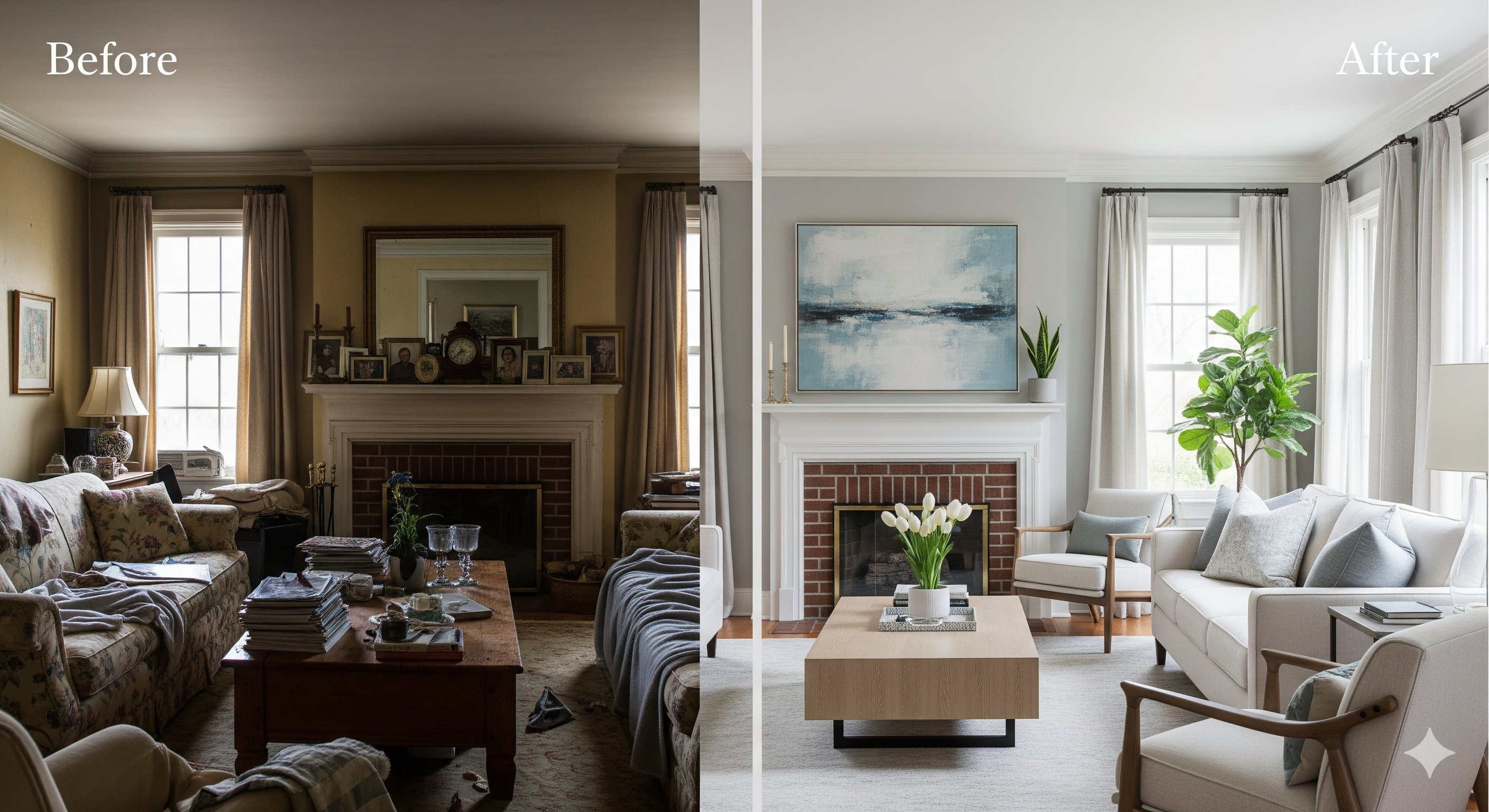
When you decide to sell your home in the Hudson Valley, you’re not just selling a structure of wood and stone; you're selling a vision. You’re offering a potential lifestyle—a future of crisp autumn mornings overlooking the Catskills, of cozy winter evenings by the fire, of a life connected to nature and community. The single most powerful tool you have to translate that vision into a top-dollar offer is home staging.
Many sellers think of staging as expensive, optional decorating. That’s a mistake. Staging is not an expense; it is the single most critical marketing investment you can make in your property. It’s the art of creating a narrative that allows buyers to emotionally connect with a space and see their future unfolding within its walls.
The data on this is unequivocal. According to the Real Estate Staging Association (RESA), homes that are professionally staged before going on the market spend 73% less time on the market than their unstaged counterparts. Less time on the market means a faster sale, fewer carrying costs, and often, a higher final price.
However, let's be strategic. In today's market, the real estate landscape is evolving. The median cost for a professional staging service has climbed to around $1,500, and some industry reports suggest that the direct financial returns aren't always guaranteed for every home. This is where smart, strategic thinking comes in. The secret to a successful sale isn’t about spending the most money; it’s about making the
smartest investments. This guide is designed to cut through the noise and focus on the nine proven, cost-effective home improvements that deliver the highest Return on Investment (ROI), empowering you to maximize your home’s value without breaking the bank.
Declutter & Depersonalize: The Blank Canvas Effect
The Why: Before you spend a single dollar on paint or plants, the most impactful and highest-leverage action you can take costs nothing but your time. As staging professionals often say, "The most important and cost-effective home staging tip is to declutter the entire house before it goes on the market. The fewer items in the home, the better".
The psychological impact is profound. Clutter is a visual and mental distraction. When a buyer walks into a cluttered room, their brain has to work overtime to see past your belongings, your collections, and your life. This creates a cognitive barrier, preventing them from forming an emotional connection with the space itself. By
depersonalizing your home—removing family photos, diplomas, and personal collections—you transform it from your house into a blank canvas. This allows buyers to mentally move in, projecting their own lives, furniture, and memories onto the space. It’s the essential first step to helping them fall in love.
Furthermore, this is not merely an aesthetic exercise; it's a direct marketing tactic. When a potential buyer opens a closet and sees it packed to the brim, they don't just see clutter; their brain registers "insufficient storage," a major objection that can kill a sale. By removing half the items, you are not just cleaning—you are actively marketing a key feature of the home: its ample storage space. You are preemptively handling a common buyer objection and adding perceived value by subtracting.
The How:
-
Adopt the Three-Box Method: For every room, use three boxes: Keep, Donate/Sell, and Trash. Be ruthless. If you haven’t used an item in a year, it’s time for it to go.
-
The 50% Rule for Storage: Aim to remove at least half the items from every closet and bookshelf. This creates an illusion of abundant space and shows off the storage capacity—a huge selling point.
-
Erase Your Footprint: Pack away all personal items. This includes family photos, children's artwork, trophies, and any political or religious items. Completely clear the refrigerator door of magnets and notes.
-
Think Like a Hotel: The goal is a clean, inviting, and anonymous space that appeals to everyone.
A Fresh Coat of Neutral Paint: The Easiest ROI
The Why: After decluttering, applying a fresh coat of neutral paint is arguably the single best financial investment you can make when selling your home. The data confirms it: a fresh coat of interior paint yields a stunning 107% Return on Investment.
Psychologically, neutral colors work on multiple levels. They act as a clean, sophisticated backdrop that appeals to the widest possible audience, offending no one and welcoming everyone. Your personal love for a crimson dining room might be unique, but it's a gamble that could alienate 90% of potential buyers who see it as a future project. Neutral paint de-risks your property, increasing your buyer pool and, by extension, the potential for a competitive offer. Lighter, neutral shades also reflect light, making rooms feel significantly larger, brighter, and more open—qualities every buyer is looking for.
The How:
-
Choose Warm Neutrals: Steer clear of stark, cold whites. Opt for sophisticated, warm neutrals that feel modern yet inviting. Think light grays, soft beiges, and the ever-popular "greige" (a mix of gray and beige).
-
Hudson Valley Hot Tip: For a look that perfectly captures the "bucolic luxury" aesthetic so popular with buyers in our area, you cannot go wrong with Benjamin Moore's White Dove. It's a warm, complex white that reads as high-end and timeless, making every room feel effortlessly chic.
-
Mind the Finish: Use a durable, subtly reflective finish like eggshell or satin for walls. It’s easier to clean than matte and has a gentle sheen that enhances light. Use semi-gloss for trim, windows, and doors to make architectural details pop.
Boost Your Curb Appeal: Win the First Impression
The Why: The first impression of your home is no longer made when a buyer pulls up to the curb; it's made days or weeks earlier when they're scrolling through photos online. A drab, unkempt exterior can cause a buyer to swipe past your listing without a second thought. Conversely, a home with outstanding curb appeal signals that the property has been meticulously cared for, building buyer confidence before they even set foot inside.
Many sellers focus their budgets on interior updates like kitchens and baths, but the hard data reveals a surprising truth: the highest ROI improvements are almost all on the exterior of the home. Your first dollar is often best spent outside.
The How: Focus on high-impact, low-cost projects that make your home look crisp, clean, and inviting. As noted by real estate experts in a 2025 Better Homes & Gardens report, "Investing in curb appeal provides a remarkable return on investment, often surpassing 100%. Basic landscaping and yard upkeep can yield up to 200% ROI".
Here are the projects that deliver the biggest bang for your buck:
|
Project |
Average Cost |
Return on Investment (ROI) |
Source |
|
Power Washing |
$100 - $400 |
200%+ |
|
|
Basic Landscaping & Mulch |
$300 - $1,000 |
150%−200% |
|
|
Steel Entry Door Replacement |
~$2,355 |
188% |
|
|
Garage Door Replacement |
~$4,500 |
194% |
-
Actionable Checklist:
-
Power Wash Everything: Clean the siding, walkways, driveway, and deck. This is a low-cost task that instantly makes a property look years younger.
-
Landscape and Mulch: Weed all garden beds, trim overgrown shrubs, and apply a thick, fresh layer of dark mulch. The contrast makes greenery pop and looks incredibly sharp.
-
Paint the Front Door: A freshly painted front door in a classic, welcoming color like black, navy, or a deep red is a powerful focal point.
-
Update the Details: Install new, modern house numbers, a stylish new mailbox, and an updated porch light. These small details have an outsized impact.
-
Add Seasonal Color: Place large planters with seasonal flowers on either side of the front door for a vibrant, welcoming touch.
Let There Be Light: Brighten Every Room
The Why: Light is a powerful mood enhancer. Bright, well-lit rooms feel larger, cleaner, more cheerful, and more valuable. Darkness, on the other hand, can make a space feel small, dated, and depressing. In the digital age, lighting has taken on an even more critical role. Your home will be judged first by its online photos, and nothing is more important for stunning real estate photography than excellent lighting. A poorly lit home photographs poorly, leading to fewer clicks, fewer showings, and ultimately, a lower price. Improving your home's lighting is a direct investment in its digital marketing performance.
The How: Your goal is to create layers of light that make every room feel warm and inviting, both in person and on camera.
-
Maximize Natural Light:
-
Thoroughly clean every window, inside and out. You'll be shocked at how much more light comes through.
-
Remove heavy, dated drapery. If privacy is needed, use simple, sheer curtains that allow light to filter through. Otherwise, leave windows bare to maximize the view and light.
-
Walk the perimeter of your house and trim any overgrown trees or bushes that are blocking sunlight from pouring into the windows.
-
Upgrade Artificial Light:
-
Replace every single lightbulb with a bright, energy-efficient LED. Consistency is key for photography, so use the same color temperature throughout the house. Aim for a warm, flattering "soft white" glow (around 2700K−3000K).
-
Aim for a total of 100 watts for every 50 square feet of living space to ensure rooms are adequately lit.
-
Layer Your Lighting: Don't rely on a single overhead fixture. Every room should have three layers of light:
-
Ambient: General overhead lighting from ceiling fixtures or recessed cans.
-
Task: Focused lighting for activities, such as reading lamps or under-cabinet lights in the kitchen.
-
Accent: Softer lighting that adds warmth and highlights features, like wall sconces or a picture light.
-
Use Mirrors Strategically: Place a large mirror on a wall directly opposite a window. It will act like a second window, bouncing light around the room and creating a powerful illusion of depth and brightness.
Define Each Room's Purpose
The Why: Confusion kills sales. When a buyer walks into a room and has to wonder, "What is this space for?" you have created a mental hurdle that detracts from their experience. Every single space in your home, from the largest bedroom to the smallest nook, must have a single, clear, defined purpose.
By staging a room's function, you are actively creating value. An undefined "bonus room" has an ambiguous worth. A staged "home office" or "fourth bedroom," however, has a concrete, marketable value that buyers are actively searching for. You are turning unused space into a tangible asset that can increase your home's appeal and final sale price.
The How:
-
One Room, One Job: Resist the urge to create multi-purpose rooms. A space staged as a dedicated home office is far more powerful than a room that's an office/gym/storage catch-all.
-
Stage for the Modern Buyer: In today's work-from-home culture, a dedicated home office is one of the most sought-after features. If you have a spare room, staging it as a stylish and functional office is one of the smartest moves you can make.
-
Get Creative with Awkward Spaces:
-
The "Junk Room": Transform it into a welcoming guest bedroom. You don't need an expensive bed; a high-quality air mattress on a simple frame, dressed beautifully with crisp linens and pillows, can effectively showcase the room's potential.
-
An Empty Basement Corner: Stage it as a cozy reading nook with a comfortable armchair, a small side table, and a floor lamp.
-
An Awkward Landing: Add a slim console table and a mirror to create an elegant vignette, or a small desk to show its potential as a homework station.
Focus on Kitchens & Bathrooms: The Money Rooms
The Why: Buyers pay the most attention to kitchens and bathrooms for a simple reason: they are the most expensive and disruptive rooms to renovate. An updated, sparkling clean kitchen and bath signal a move-in-ready home and build immense buyer confidence. An outdated or grimy one screams "expensive project," which can be an instant deal-killer.
The goal here is not a full-scale remodel. It's about a strategic refresh that creates the impression of a clean, modern, and meticulously maintained space. Buyers are subconsciously looking for red flags like peeling caulk or stained grout, which trigger fears of larger, hidden issues like water damage. Small, inexpensive fixes that address these fears have an outsized psychological impact, building trust and protecting your value.
The How:
-
Kitchen Refresh Checklist:
-
Deep Clean: Clean every surface until it shines. Polish appliances, degrease the stovetop and hood, and scrub the sink.
-
Clear the Counters: Remove everything except one or two well-chosen decorative items. A bowl of fresh lemons or a simple orchid adds a touch of life without creating clutter.
-
Update Hardware: This is a game-changer. Swapping dated, worn cabinet knobs and pulls for modern hardware in matte black or brushed brass is a cheap, easy update that can instantly modernize the entire kitchen.
-
Consider Paint: If your wood cabinets are looking tired, painting them a crisp white or sophisticated gray can transform the space for a fraction of the cost of replacement.
-
Bathroom Refresh Checklist:
-
Scrub and Re-caulk: Clean grout lines with a grout cleaner or a grout pen. Scrape out any old, discolored caulk around the tub, shower, and sink and apply a fresh, clean bead. This simple fix makes the entire room look newer.
-
Upgrade Linens: Purchase a new set of fluffy, white towels. Fold them neatly or roll them and place them in a basket for a spa-like feel. Add a new, clean-lined shower curtain.
-
Modernize Fixtures: If the vanity light, mirror, or faucet are dated, replacing them with modern, inexpensive options from a home improvement store can have a huge impact.
-
Replace the Toilet Seat: A brand-new toilet seat is a small detail that makes a big difference in the perception of cleanliness.
Arrange Furniture for Flow & Space
The Why: How furniture is arranged is a form of non-verbal communication. It tells a buyer how to experience a room. A poor layout can make a space feel cramped, awkward, and dysfunctional. A thoughtful arrangement, however, creates clear traffic patterns and inviting conversational zones, making the room feel larger, more intuitive, and full of positive energy. You are not just placing furniture; you are staging a desirable experience.
The How:
-
Pull Furniture Away from the Walls: This is the most important and often overlooked rule. Many people believe pushing furniture against the walls maximizes space, but it does the opposite—it makes a room feel static and small. By "floating" your sofa and chairs even a few inches off the wall, you create "breathing room" that makes the entire space feel more open and thoughtfully designed.
-
Create Conversational Zones: Arrange seating pieces to face each other, not all pointing at the television. This creates an intimate, welcoming atmosphere that encourages connection.
-
Anchor to a Focal Point: Identify the room's best feature—a beautiful fireplace, a large window with a view, or a wall of built-in bookshelves—and arrange the furniture to highlight it. This gives the room a clear purpose and draws the buyer's eye to a key selling feature.
-
Define Traffic Paths: Imagine walking through the room. Are the pathways clear and logical? A buyer should be able to move easily from the entrance to the exit without weaving around furniture. If the flow is blocked, the room feels dysfunctional.
Add Life with Greenery
The Why: Humans have an innate connection to nature, a concept known as biophilia. Incorporating plants and greenery into your home taps into this powerful psychological principle, making a space feel calmer, healthier, and more alive. In a staged home with a neutral color palette, plants provide a vital pop of organic color and texture, preventing the space from feeling sterile. They also serve as a subconscious "freshness cue," signaling to buyers that the home is well-cared-for and has good air quality.
The How:
-
Think in Threes and Vary Heights: Group plants in odd numbers (like a cluster of three on a table) and use a mix of tall, medium, and trailing plants to create visual interest.
-
Strategic Placement:
-
Place a tall floor plant, like a Fiddle Leaf Fig or Snake Plant, in an empty corner to add height and draw the eye upward.
-
Add a small potted herb or a succulent to the kitchen counter.
-
Drape a trailing plant, like a Pothos, from the top of a bookshelf.
-
A vase of fresh-cut flowers on the dining table or entryway console is always a welcoming touch.
-
Choose Low-Maintenance Options: You don't need a green thumb. Opt for hardy, easy-to-care-for plants like Snake Plants, ZZ Plants, and Pothos. If you're concerned, high-quality faux plants can be just as effective.
Eliminate Objections with Minor Repairs
The Why: A buyer's mind is wired to find problems. A small issue like a dripping faucet, a sticky cabinet door, or a cracked switch plate is never just a small issue. To a buyer, it's a red flag. It signals potential neglect and plants a dangerous seed of doubt: "If the seller didn't fix this small, obvious problem, what bigger, hidden problems haven't they fixed?".
This final step is about controlling the narrative during the critical home inspection phase. Every minor, unfixed issue is a potential negotiating point for the buyer after their inspection. By proactively addressing these items before you list, you are not just improving your home; you are strengthening your future negotiating position, protecting your sale price, and ensuring a smoother path to closing.
The How:
-
Create Your "Punch List": Walk through your home with the critical eye of a buyer. Better yet, ask a brutally honest friend to do it with you. Make a detailed list of every little thing that's broken, sticky, or worn out.
-
The Weekend Fix-It Checklist:
-
Fix all leaky faucets and running toilets.
-
Repair any dings or cracks in the drywall and perform paint touch-ups.
-
Replace every single burned-out lightbulb.
-
Lubricate any squeaky doors or sticky windows.
-
Tighten any loose handles on doors and cabinets.
-
Replace any cracked or discolored light switch plates and outlet covers.
-
The Goal: Your mission is to eliminate every possible distraction that could take a buyer's focus off your home's best features and give them ammunition to negotiate your price down.
The Buyer's Perspective: Seeing is Believing
Ultimately, these nine tips are all designed to accomplish one critical goal: bridging the imagination gap. An empty or cluttered home forces a buyer to work to envision its potential. A beautifully staged home does the work for them, presenting a compelling, move-in-ready vision they can instantly connect with.
The data on this is overwhelming. According to the National Association of Realtors' 2025 Profile of Home Staging, a staggering 81% of buyer's agents report that staging makes it easier for their clients to visualize a property as their future home. This visualization is the critical moment when a prospective buyer transitions from analyzing a property to desiring it.
We also live in an era of elevated expectations. Thanks to countless home design shows, nearly half of all buyers now expect homes to look like they were staged for television, and a majority (58%) report being disappointed by how homes look in reality compared to what they see on screen. Strategic staging allows your home to meet—and exceed—these media-driven expectations, making it stand out from the competition and feel truly special.
Conclusion: Your Investment in a Faster, More Profitable Sale
Preparing your home for the market is a significant undertaking, but it’s crucial to view these efforts not as costs, but as strategic investments in your final outcome. By focusing on these nine high-impact areas—from decluttering and painting to boosting curb appeal and making minor repairs—you are taking control of your sale.
You are crafting a product that appeals to the broadest possible audience, creating an emotional connection that inspires strong offers, and eliminating the small objections that can derail a deal or chip away at your price. Strategic, cost-effective staging is the proven path to selling your home faster and for the highest possible price, ensuring you protect and maximize the hard-earned equity you’ve built.
Ready to unlock your Hudson Valley home's true potential? The right staging strategy can add tens of thousands to your sale price.
Contact me, Levan Tsiklauri, today for a free, confidential home valuation and a personalized staging consultation. Let's create a plan to get you the highest possible price in the shortest amount of time. Click below
Levan Tsiklauri (LT) | Realtor®
(917) 905-7923 | Levan@realtylt.com
www.realtylt.com | [ Book a Consultation▸]
1097 Route 55, Suite 9, Lagrangeville, NY 12540


or another way